
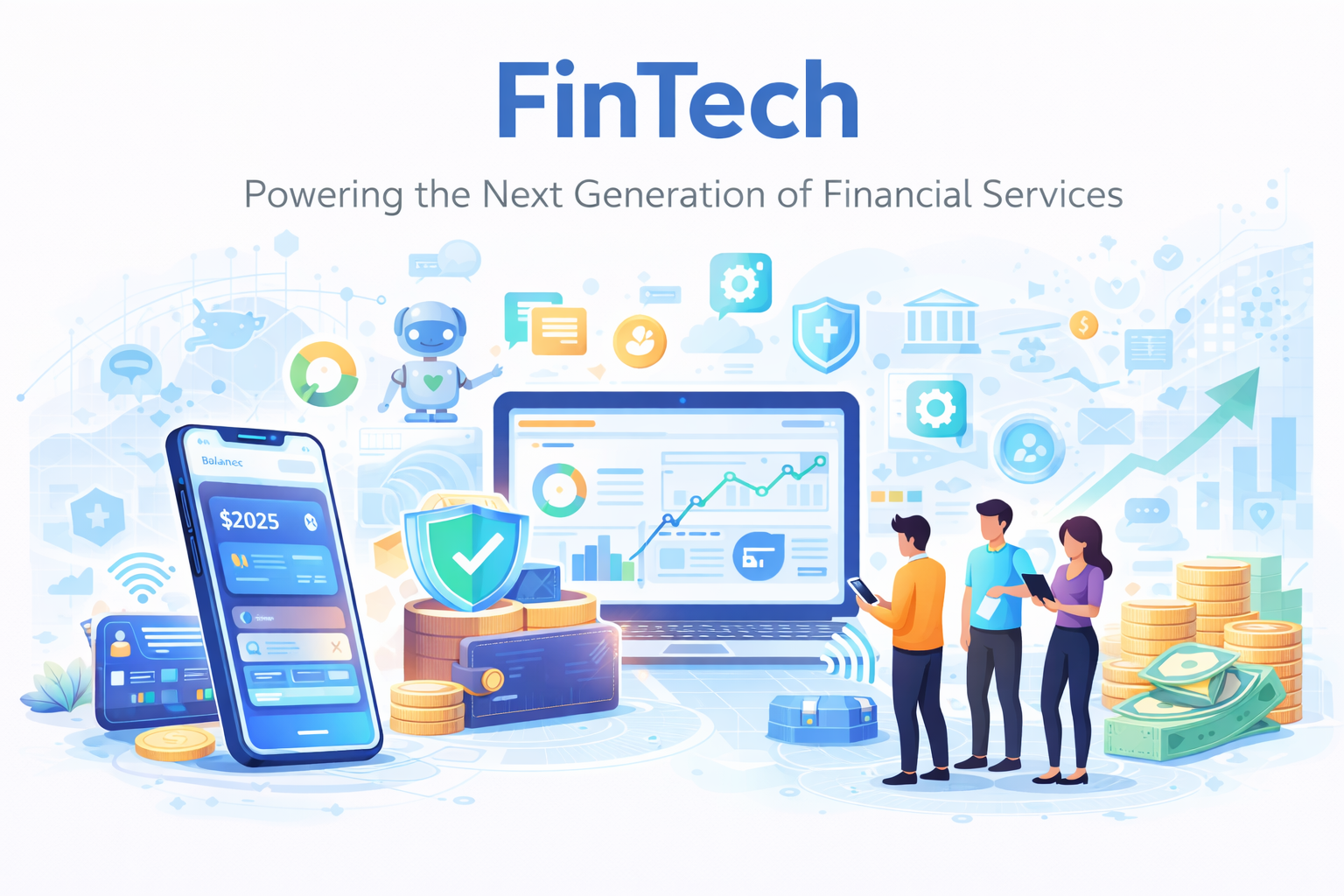
Financial Technology, commonly known as FinTech, has become a driving force behind the modernization of the global financial system. By combining finance with advanced digital technologies, FinTech is transforming how people save, spend, invest, and manage money. What once required physical branches, paperwork, and long processing times can now be done instantly through smart digital platforms.
FinTech refers to the use of technology to improve and automate financial services. This includes mobile banking apps, digital payment systems, online lending platforms, investment tools, insurance technology, and financial management software. The primary objective of FinTech is to make financial services more accessible, efficient, and user-friendly for both individuals and businesses.
One of the most significant contributions of FinTech is enhanced accessibility. People can now open bank accounts, apply for loans, or invest in financial products without visiting a physical location. Mobile-first solutions have expanded financial access to rural and underserved areas, supporting financial inclusion on a global scale. Small businesses and startups also benefit from simplified payment systems and digital accounting tools that reduce operational complexity.
FinTech has also revolutionized payments and transactions. Digital wallets, contactless payments, and real-time money transfers have made transactions faster and more secure. These innovations support the growing demand for cashless economies and enable seamless online and offline commerce. For consumers, this means convenience; for businesses, it means improved efficiency and better cash flow management.
Another key area where FinTech excels is data-driven financial decision-making. Advanced analytics, artificial intelligence, and machine learning help platforms analyze user behavior and provide personalized financial insights. From budgeting recommendations to automated investment strategies, FinTech empowers users to make informed decisions based on real-time data rather than assumptions.
Security and trust are central to FinTech growth. Modern FinTech platforms use encryption, biometric authentication, and fraud detection systems to protect user data. While digital threats exist, continuous innovation in cybersecurity is helping build confidence among users. Regulatory frameworks are also evolving to ensure that FinTech solutions operate responsibly and transparently.
FinTech has reshaped the investment landscape as well. Online trading platforms and robo-advisors have lowered entry barriers, allowing individuals to start investing with minimal capital. These tools simplify portfolio management and offer educational resources, making investing more approachable for beginners and more efficient for experienced investors.
Despite its advantages, FinTech faces challenges such as regulatory compliance, data privacy concerns, and the need for digital literacy. Addressing these issues requires collaboration between technology providers, financial institutions, and policymakers to create balanced and sustainable ecosystems.
In conclusion, FinTech is redefining the future of financial services by blending innovation with practicality. It empowers individuals, supports businesses, and drives economic growth through smarter financial solutions. As technology continues to advance, FinTech will remain a cornerstone of modern finance, shaping a more connected and inclusive financial world.