
Blog

  • Building Smarter Financial Habits Through Technology

    Building Smarter Financial Habits Through Technology

    The way people interact with money has changed dramatically over the last decade, and digital finance stands at the center of this transformation. Powered by technology and innovation, digital finance is helping individuals and businesses build smarter, faster, and more efficient financial habits. From daily payments to long-term financial planning, digital tools are reshaping every aspect of the financial ecosystem.

    Digital finance refers to financial services delivered through digital platforms such as mobile apps, websites, and cloud-based systems. These services include online banking, digital wallets, automated savings tools, digital insurance platforms, and technology-enabled lending solutions. The primary goal is to simplify financial processes while improving accessibility and transparency for users.

    One of the most noticeable benefits of digital finance is improved money management. Budgeting apps and financial dashboards allow users to track spending, monitor income, and set savings goals in real time. Instead of manually recording expenses, individuals can now access instant insights into their financial behavior. This encourages better planning, reduced overspending, and stronger financial discipline.

    Digital finance has also enhanced speed and efficiency in transactions. Payments that once took days to process can now be completed instantly through digital payment systems. Whether it’s paying utility bills, transferring funds, or shopping online, digital platforms ensure seamless and secure transactions. This speed is especially beneficial for businesses that rely on fast cash flow and accurate financial records.

    Another important contribution of digital finance is its impact on credit access. Digital lending platforms use alternative data and smart algorithms to assess creditworthiness, making loans more accessible to individuals and small businesses who may lack traditional credit histories. This approach supports financial inclusion and enables economic growth by empowering underserved communities.

    Technology-driven finance also promotes transparency and accountability. Digital records reduce the risk of errors and fraud while making it easier to audit transactions. Users can review transaction histories, receive instant alerts, and maintain better control over their finances. For institutions, this leads to improved compliance and operational efficiency.

    Digital finance continues to evolve with emerging technologies such as artificial intelligence and automation. AI-driven tools help users plan investments, optimize savings, and manage risks more effectively. Automation reduces human intervention, lowers costs, and improves accuracy across financial services. As these technologies mature, they will further personalize financial experiences.

    Despite its many advantages, digital finance requires awareness and responsible use. Users must stay informed about data privacy, online security, and safe digital practices. Building trust through education and robust security systems is essential for long-term adoption and sustainability.

    In essence, digital finance is not just about convenience—it’s about empowerment. By offering smarter tools, faster access, and better insights, digital finance enables people to take charge of their financial lives. As technology continues to advance, digital finance will play a vital role in shaping a financially aware and digitally connected society.
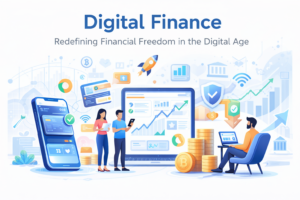

  • Redefining Financial Freedom in the Digital Age

    The rapid advancement of technology has brought a major shift in how financial services are created, delivered, and used. Digital finance has emerged as a powerful force that is redefining financial freedom by making money management more flexible, efficient, and user-centric. Today, financial activities that once depended on physical institutions are seamlessly handled through digital platforms.

    Digital finance covers a wide range of services, including online banking, mobile payments, digital lending, insurance platforms, and technology-driven investment tools. These services allow users to perform transactions anytime and anywhere, removing the limitations of traditional banking hours and physical branch visits. This convenience has significantly improved the overall customer experience and increased adoption across different age groups.

    One of the most impactful contributions of digital finance is its support for small businesses and entrepreneurs. Digital payment gateways, accounting software, and online lending platforms enable businesses to operate more smoothly and scale faster. Entrepreneurs can accept payments instantly, monitor cash flow in real time, and access funding options without complex paperwork. This has lowered entry barriers and encouraged innovation across industries.

    Another major transformation brought by digital finance is data-driven decision-making. Financial apps and platforms analyze user behavior and transaction data to offer personalized recommendations. Whether it’s budgeting insights, saving goals, or investment suggestions, technology helps users make smarter financial choices based on real-time information rather than guesswork.

    Digital finance has also played a crucial role in reducing dependency on cash. Cashless transactions promote transparency, reduce the risk of theft, and improve record management. As digital payment systems continue to grow, they support faster economic activity and help governments track financial flows more efficiently. This shift contributes to stronger financial systems and improved regulatory compliance.

    Innovation remains at the heart of digital finance. Technologies such as artificial intelligence, machine learning, and blockchain are being integrated to enhance security, automate processes, and reduce fraud. AI-powered chatbots provide instant customer support, while smart algorithms help detect unusual transactions and prevent financial crimes. These innovations are continuously improving trust and reliability in digital financial services.

    However, the growth of digital finance also highlights the importance of digital awareness and responsible usage. Users must understand basic cybersecurity practices, such as protecting passwords and recognizing online threats. Financial institutions and policymakers also play a vital role in ensuring user education, strong regulations, and ethical use of data.

    In summary, digital finance is not just about technology—it’s about empowerment. It enables individuals to take control of their financial lives, supports business growth, and strengthens the digital economy. As digital ecosystems evolve, digital finance will continue to shape a future where financial services are smarter, faster, and more inclusive.

  • Transforming the Way We Manage Money

    Transforming the Way We Manage Money

    Digital finance has rapidly reshaped the global financial landscape, changing how individuals and businesses interact with money. From mobile banking apps to online investment platforms, technology has made financial services faster, more accessible, and more efficient than ever before. As internet penetration and smartphone usage continue to rise, digital finance is no longer a luxury—it has become a necessity in everyday life.

    At its core, digital finance refers to the use of technology to deliver financial services through digital channels. These include online banking, digital wallets, payment gateways, peer-to-peer transfers, and cloud-based financial tools. Traditional banking methods that once required long queues and paperwork can now be completed in minutes with a few taps on a smartphone. This shift has significantly improved convenience while reducing operational costs for financial institutions.

    One of the biggest advantages of digital finance is accessibility. People in remote or underserved areas can now access banking services without needing a physical branch nearby. Mobile wallets and digital payment systems have played a major role in promoting financial inclusion by allowing users to store money, make payments, and receive funds securely. Small businesses and freelancers also benefit from digital finance tools that simplify invoicing, payments, and expense tracking.

    Security and transparency are other major pillars of digital finance. Advanced encryption, two-factor authentication, and biometric verification help protect user data and financial transactions. While concerns about cyber threats exist, continuous improvements in cybersecurity and regulatory frameworks are strengthening trust in digital financial systems. Blockchain technology, in particular, is gaining attention for its ability to provide secure, transparent, and tamper-resistant transaction records.

    Digital finance has also transformed investment and wealth management. Online trading platforms, robo-advisors, and financial apps allow users to invest in stocks, mutual funds, and other assets with minimal effort. These tools provide real-time data, personalized insights, and lower entry barriers, making investing more approachable for beginners. As a result, more people are taking control of their financial futures.

    Another important aspect of digital finance is its role in the growth of the digital economy. Cashless transactions support faster commerce, improve record-keeping, and reduce dependency on physical currency. Governments and financial institutions are increasingly encouraging digital payments to enhance transparency, reduce fraud, and boost economic efficiency. Digital finance also supports innovation by enabling startups and fintech companies to develop new solutions tailored to modern financial needs.

    Despite its many benefits, digital finance comes with challenges. Digital literacy, data privacy concerns, and unequal access to technology remain issues in some regions. Addressing these challenges requires collaboration between governments, financial institutions, and technology providers to create inclusive and secure systems.

    In conclusion, digital finance is transforming the way money is managed, shared, and invested. It empowers individuals, supports businesses, and drives economic growth in a connected world. As technology continues to evolve, digital finance will play an even more critical role in shaping a smarter, more inclusive financial future.